Preventive Pediatric Dentistry
Preventive dental care is important throughout life, especially at a young age. By practicing good oral hygiene at home and scheduling regular checkups with the dentist, your child can help keep their smile bright and healthy for many years to come. Here are a few simple ways to prevent the build-up of plaque and cavities:
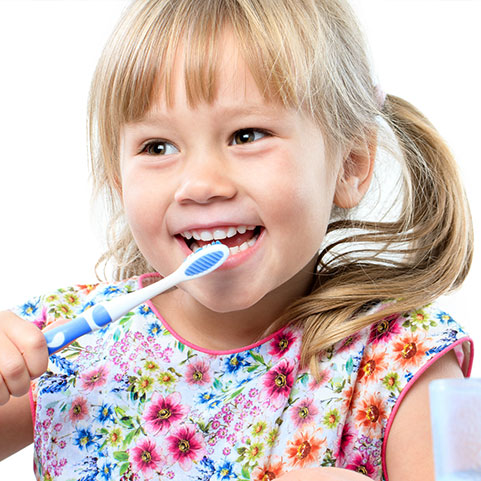
- Make sure your child brushes their teeth in the morning after breakfast and before going to sleep at night with a soft-bristled toothbrush. Use fluoride toothpaste to remove food particles and plaque from the tooth surfaces. Also be sure your child brushes the top surface of the tongue; this will remove any extra plaque-causing food particles and help keep their breath fresh!
- Make sure your child cleans between teeth by flossing once a day. You can also use a mouthwash to help kill bacteria and freshen breath. Decay-causing bacteria can linger between teeth where toothbrush bristles can't reach. Floss and mouthwash will help remove plaque and food particles from between the teeth and under the gum line.
- Make sure your child eats a balanced diet, and try to avoid extra-sugary treats. Nutritious foods such as raw vegetables, plain yogurt, cheese, or fruit can help keep your child's smile healthy.
- Remember to schedule regular checkups with your child’s dentist every six months for a professional teeth cleaning with our dental hygienists.
- Ask Dr. Holden about dental sealants, a protective coating that can be applied to the chewing surfaces of the back teeth where cavities often starts.
- If your child plays sports, be sure to ask Dr. Holden about special mouthguards designed to protect your child’s smile.
If it’s been six months or more since your child’s last dental checkup, then it’s time to contact our practice and schedule an appointment!
Sealants
Sealants are a protective coating that shields the chewing surfaces of your child's back teeth from harmful, cavity-causing bacteria. They are easy to apply with a brush and set with our highest technology LED curing light. We use only the finest materials that are BPA free. Sealants are usually applied on your child's first molars, once they fully erupt (around age eight) and again on second molars, between 12-15 years old.
Nutrition & Oral Health
Establishing good nutritional habits for your child can be especially beneficial to promote good eating patterns and food choices for the rest of his or her life. Think of your child’s mouth as the doorway to the rest of their body. Whatever gets consumed not only affects your child’s growth, development, weight, and energy levels, but oral health as well. Eating a nutritious, balanced diet is vital for the development of strong, healthy teeth.
General Tips for a Healthy Diet and a Healthy Mouth
- Limit your child’s consumption of sugary foods and beverages. When plaque combines with the sugars and starches, an acid is produced that attacks enamel on the teeth, and eventually causes decay.
- Make sure your child’s diet includes a balance of fruits and vegetables, whole grains, protein, and dairy products. The nutrients found in these foods are important to his or her growth and health.
- Look for sugar in unexpected places. Many foods that make up a balanced, healthy diet contain sugar — including fruit, some vegetables, and milk. The best time to eat these is during meal time, not as a snack if you can.
- Speaking of snacks, try to limit your child’s snacking to only a few per day, and make sure they’re nutritious!
- Fun foods, like candy, should be reserved for special occasions, not everyday snacking.
- When he or she is old enough, let your child chew sugar-free gum with xylitol. Chewing xylitol gum increases saliva flow, which washes away food debris and neutralizes acids produced by bacteria.
- Ensure your child brushes twice a day and help them floss to prevent cavities in between their teeth.
Mouthguards
Protecting your child’s smile while playing sports is essential. Sports related injuries to the mouth and jaw are some of the most common injuries received by athletes.
Mouthguards help protect teeth and gums from injury. If your child participates in basketball, boxing, hockey, football, gymnastics, lacrosse, martial arts, racquetball, rugby, track and field, skateboarding, skiing and snowboarding, skydiving, soccer, surfing, volleyball, water polo, weightlifting or wrestling, it is recommended by the American Dental Association that a mouthguard is worn. You can purchse a boil and bite mouthguard at a local sporting goods store or online. If you want a custom fit mouthguard, please call our office so we can make one that fits perfectly to their teeth.